The sharp, synthetic smell of crushed black rubber rises from the field as the morning frost burns off. You lace up your boots, feeling the familiar chill of the damp turf dew seeping through the woven mesh, listening to the distinct, hollow crunch of plastic blades shifting beneath your weight. It is a sensory ritual that millions of amateur athletes repeat every weekend across the country, preparing the body for the shock of competition.
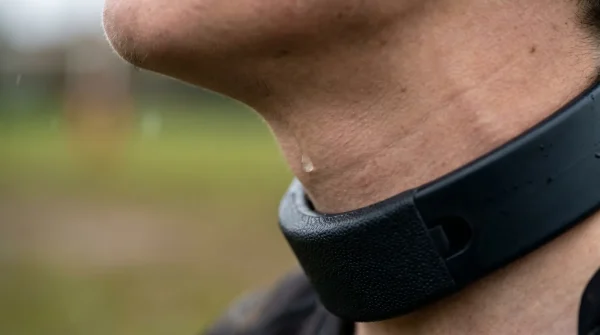
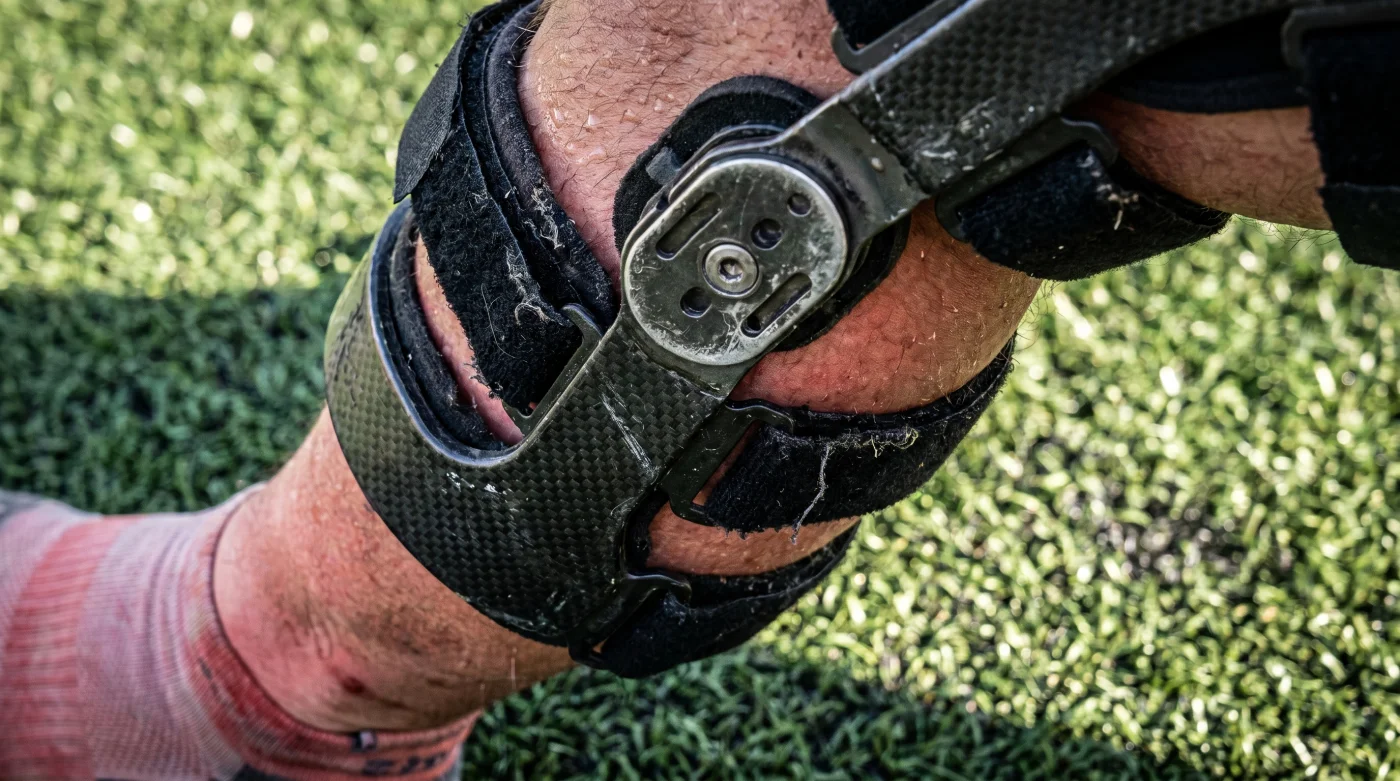
There is a creeping anxiety in the air before the whistle blows lately. You watch guys in your weekend league strapping into heavy, articulated carbon-fiber cages, hoping to buy borrowed time against the violent, gripping nature of modern artificial grass.
It looks like a local arms race playing out in real time. Our news feeds are dominated by professional athletes clutching their legs on stadium turf, their seasons ended by the unyielding grip of artificial surfaces. This reaction cascades rapidly down to amateur leagues and weekend pick-up games. Search interest for heavy-duty stabilization gear is spiking violently as everyday players attempt to mimic professional injury protocols, purchasing medical-grade equipment with a simple click.
But treating your physical frame like a collection of isolated, mechanical parts creates a dangerous illusion. Bolting down a hinge joint doesn’t magically erase the massive kinetic force of a hard cut; it just forces the impact pressure elsewhere.
The Energy Displacement Trap
Think of your lower body as a highly pressurized water pipe. When you plant your foot into artificial turf to change direction, your body generates an intense surge of downward pressure. The turf, unlike natural grass, does not give way, slide, or tear. It grips your cleat with ruthless, mechanical efficiency, sending all that generated force right back up your leg.
If you lock down your knee with a rigid prophylactic shell, that force has nowhere to disperse. It shoots directly down the pipeline, where it violently overloads the ankle ligaments or travels upward to torque the hip.
We see professionals wearing these heavy rigs because their livelihoods depend on protecting a specific surgical repair, often a fresh reconstruction of a major ligament. They have an army of physiotherapists managing the secondary risks, fine-tuning the rest of the limb to compensate for the restricted movement. You, playing under the stadium lights on a Tuesday night, are adopting a professional safety measure without the surrounding safety net, unknowingly transferring the risk to an unprotected joint.
Consider the warning from Marcus Vance, a 42-year-old sports physiotherapist who spent a decade rebuilding sidelined collegiate athletes. Vance routinely sees amateur players limping into his clinic with catastrophic high ankle sprains, confused because they were wearing top-tier knee protection. “They treat the brace like a bulletproof vest,” Vance says, “but they are simply redirecting structural damage downward toward a smaller, more fragile target.”
- Foam Rollers Worsen Knee Band Inflammation When Used Horizontally
- Electrolyte Powders Waste Money Without Precise Sodium Potassium Ratios
- Playbook Wristbands Simplify Complex Audible Chains For Amateur Quarterbacks
- Pine Tar Sticks Around Because Batters Hate Synthetic Grips
- Grip Socks Provide The Footing Needed For Explosive Cuts
Rethinking the Armor
Not all joint support is created equal, and not all athletes need the same level of intervention. How you approach your own structural integrity depends entirely on your injury history, the specific ground you play on, and how your foot interacts with the surface.
The way you protect your legs must adapt to your physical reality, rather than mimicking the panic you see on weekend television broadcasts.
The Preventative Player
If you have never torn a major ligament, a rigid hinge is actively working against your biology. It signals your natural stabilizing muscles to power down and rely on the plastic cage. Instead, focus on proprioception—light compression sleeves that simply keep the joint warm and send heightened sensory feedback to your brain so your muscles react faster to unstable ground.
The Surgical Veteran
If you are returning to the field after a major operation, the rigid brace is a temporary bridge, not a permanent home. Your focus must be on gradually weaning off the structure, heavily reinforcing the ankle and hip mobility to handle the displaced load until the knee can bear the brunt alone.
Building Structural Resilience
True joint protection happens in the living room and the gym, long before your cleats touch the rubber pellets. It requires a minimalist, mindful approach to how your foot strikes the ground and absorbs shock.
You want your muscles and tendons to act like a heavy sponge, distributing the violent impact evenly across the entire chain.
Start from the ground up to rebuild your natural shock absorbers. Ditch the rigid ankle taping if you are bracing the knee; you need the ankle to have some give. Spend 10 minutes barefoot every morning, balancing on a rolled-up towel to wake up the micro-stabilizers in your feet. Perform slow, controlled eccentric calf drops, taking three full seconds to lower your heel off a step.
This tactical toolkit requires quiet patience, forcing you to focus entirely on temperature, mobility, and surface friction.
Apply this logic before you touch the field. Use 15 minutes of dynamic warmth before touching the turf, because a cold ligament snaps while a warm one stretches. Swap out long, aggressive blade studs for turf-specific cleats with shorter, circular studs. You want the shoe to slip before the ligament tears.
We live in an era where we instinctively try to out-engineer our own biology. We see an athlete go down on television, panic, and immediately search for a product to bolt onto our bodies to make us indestructible.
Moving With the Ground, Not Against It
When you step onto the turf without relying on heavy armor, trusting the tension in your own muscles and the flexibility of your joints, the game changes. You stop playing with the stiff anxiety of someone waiting for a snap.
True longevity in the sports you love comes from listening to the quiet signals. You find that fluid, unburdened rhythm that made you fall in love with playing in the first place.
“Athletic longevity is not about building an impenetrable cage around your joints; it is about teaching the entire muscular system to whisper to the ground instead of shouting at it.” – Marcus Vance
| Key Point | Detail | Added Value for the Reader |
|---|---|---|
| Preventative Bracing | Restricts natural knee hinge | Identifies why healthy knees feel weaker over time. |
| Turf Interaction | High-friction synthetic blades | Explains why natural grass does not cause the same violent force transfer. |
| Ankle Displacement | Redirects kinetic energy downward | Helps you avoid secondary injuries caused by over-protection. |
Frequently Asked Questions
Should I wear a brace if my knee feels fine?
No. If you have no injury history, restricting the joint causes stabilizing muscles to atrophy.
Why is turf more dangerous than natural grass?
Natural dirt tears away under extreme pressure, releasing your foot. Turf holds the cleat tight, forcing your joints to absorb the rotational force.
Can I train my ankles to handle the extra stress?
Yes. Barefoot balance work and eccentric calf drops build the micro-stabilizers required to manage displaced energy.
Are compression sleeves a safe alternative?
Absolutely. They provide warmth and proprioceptive feedback without locking the joint’s natural mechanics.
What type of cleats should I wear on artificial surfaces?
Opt for conical, short studs rather than long, aggressive blades. You want the shoe to yield before your ligaments do.