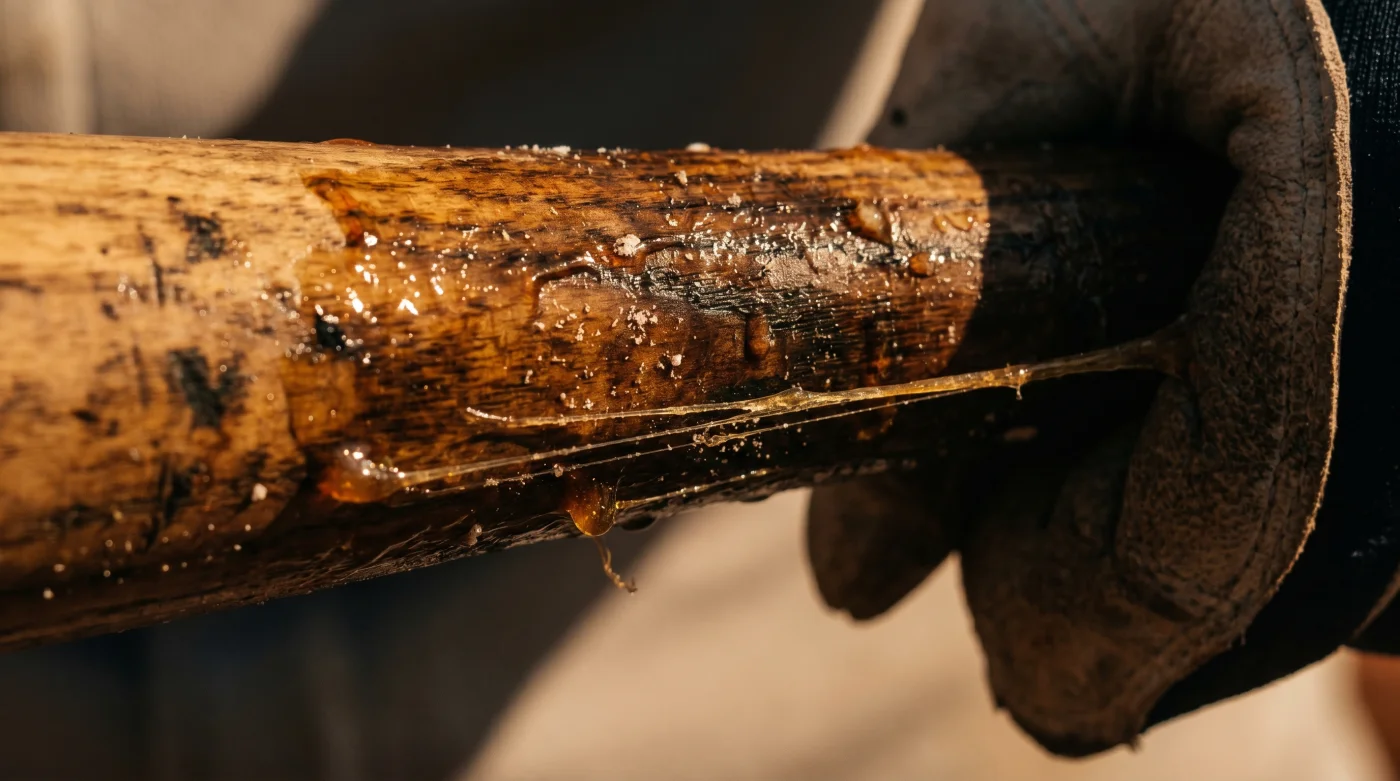
Imagine walking through the tunnel of an old minor-league stadium just before first pitch. The air hangs heavy with the scent of roasted peanuts, damp dirt, and something sharper—a pungent, earthy tang that bites the back of your throat. It smells like a pine forest caught in a summer wildfire. You expect the modern dugout to be a sterile laboratory of data tablets, slow-motion cameras, and synthetic fibers. Instead, you find the wooden bats stacked in the corner, heavily caked in a dark, sticky sludge that looks entirely out of place in a modern professional setting.
For years, sporting goods catalogs have sold you the sleek future of hitting. They market geometric, neon-colored polymer wraps engineered in aerospace labs, guaranteeing perfect friction and advanced shock absorption. You probably have one tightly wound around your bat right now, expecting it to deliver a crisp, professional edge. But when the July heat sets in and sweat drips steadily down your forearms, those space-age synthetics betray you. They turn slick and completely unresponsive now the very moment you need stability most.
Down in the professional ranks, the players understand a fundamental truth that marketing brochures ignore. The game is messy, intensely unpredictable, and entirely at the mercy of the chaotic weather of the American summer. That archaic brown smear on the bat handle is not simply a stubborn nod to baseball history. It is a highly sophisticated, organic material that drastically outperforms million-dollar lab creations every single time the local humidity spikes.
The Living Resin
You might look at a tarred bat and see a relic from the days of heavy flannel uniforms and cross-country train travel. But you need to start thinking of it less like an old tradition and more like a biological thermostat. Modern polymer wraps are stubbornly static in extreme heat. They are designed for a sterile, climate-controlled laboratory. When you step into a grueling 90-degree afternoon with ninety percent humidity, that expensive plastic-based grip rapidly turns into a hazardous water slide.
The underlying moisture has nowhere to go. The water traps itself completely against the impermeable rubber, forcing you to squeeze the handle tighter just to maintain control. That anxious tension travels straight up your forearms, inadvertently locking your wrists and violently sapping your bat speed. Your swing becomes defensive rather than fluid.
The messy truth is that traditional rosin and pine resin act exactly like a living membrane. Instead of futilely attempting to repel moisture and heat, these raw organic compounds actively absorb your body heat. As the ambient temperature rises, the heavy resin softens and activates, naturally creating a precise tackiness that perfectly matches the physical stress of your grip. Your supposed environmental flaw—the unpredictable, sweaty heat of your own hands, becomes your greatest mechanical advantage at the plate.
Talk to Tommy Smithson, a 62-year-old clubhouse manager who has spent four long decades preparing equipment for the major leagues. Smitty will gladly tell you that the quickest rookie mistake is wrapping a fresh bat in thick, shock-absorbing tape to feel artificially secure. He spends his quiet afternoons carefully heating raw pine tar on an old metal radiator, meticulously blending it with crushed rosin rocks. He knows exactly how the material breathes. He knows that when the oppressive August humidity reaches its peak, the veteran players always line up at his door, desperately asking for the messy brown sludge they ignored in April.
He watches them carry those sticky bats out to the field with absolute confidence. Trusting the natural organic response of the resin routinely saves them from a late-swing mechanical disaster. Smitty understands that the bat actually needs to read the temperature of the player’s hands to perform correctly.
The Stadium Variations
The exact way you deploy this natural adhesive depends entirely on your specific environment and the current weather conditions. Interestingly, the famous ‘tar rag’ tradition—where a heavily soaked cloth sits waiting on deck—started entirely as an accident in a damp midwestern stadium back in the 1920s. A rushing groundskeeper absentmindedly left a pine-sap towel resting on the bat rack during a prolonged rain delay. When play resumed, players immediately noticed the residue gave them a remarkably weather-proof grip.
You can effectively replicate this historical adaptation today, depending on the severity of your local climate. For the casual weekend player, a very light coat applied long before you leave the house provides just enough tack without completely ruining your expensive batting gloves. It offers a subtle confidence boost.
For the mid-summer tournament player stuck in the deep southern humidity, you require the intensive layering method. This process involves applying a solid base coat of pure liquid tar, letting it cure gently in the afternoon sun, and then dusting it heavily with coarse powdered rosin right before you step into the batter’s box. The dry powder eagerly soaks up the immediate sweat from your palms, while the underlying tar activates instantly against your warm skin.
Building Your Tactile Advantage
Applying this traditional resin is a careful exercise in restraint. You are not blindly painting a fence; you are finely tuning a precise instrument. The ultimate goal is to build a precise tactile connection that feels exactly like an extension of your own fingertips, not a gummy trap that rigidly locks your hands in place.
Rushing the process only leads to a messy, unmanageable clump. Pay close attention to how the wood beautifully accepts the thick moisture, observing the subtle changes in texture as the temperature shifts.
Start with a quiet intention, intentionally letting the material dictate the speed of the process. Here is your Tactical Toolkit to achieve the perfect, thermally-adaptive grip every time you play:
- Base Preparation: Clean the wooden handle completely with a dry, rough cloth. Ensure absolutely no synthetic residues or old tape glue remains on the grain.
- The Heat Factor: Warm the bottle of pine tar in your back pocket for at least twenty minutes before application. It must sit near your body temperature to spread evenly.
- The Thin Layer: Apply a single, dime-sized drop directly to a dedicated rag. Wipe a translucent, incredibly thin layer across the lower 8 inches of the handle.
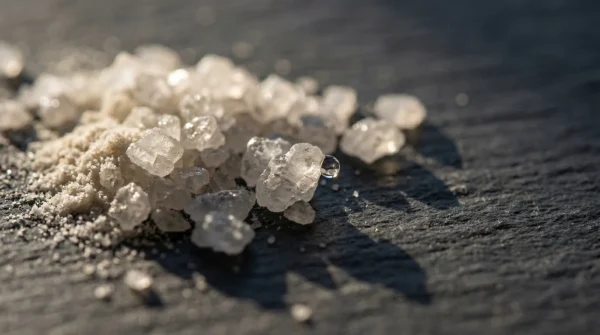
- The Rosin Dust: Crush a small amount of rosin rock over the fresh tar. Watch closely how the texture changes from a wet gloss to a matte, granular finish.
- The Squeeze Test: Grip the bat lightly with bare hands. You should clearly hear a faint pulling sound when you release, but your skin should never feel glued down.
Reclaiming Your Mechanics
There is a quiet, profound peace in stepping up to the plate fully knowing your equipment will work with you, rather than stubbornly fighting against you. When you bravely strip away the bright neon tapes and the false, slippery promises of modern synthetics, you are left with something beautifully raw and honest. You completely stop fighting the hot climate and finally start letting your own body heat fuel your performance.
Your mechanics naturally smooth out when you stop squeezing the handle in panic. You swing with completely relaxed confidence, intrinsically knowing the wooden bat will hold absolutely true even when the thick summer air feels exactly like a wet blanket.
Mastering this simple, ancient resin does far more than just keep the wood securely in your hands. It serves as a constant reminder that the most effective solutions are rarely the most technologically advanced ones sitting in a sterile package. Sometimes, the messy, sticky, highly traditional way is genuinely the only way to feel truly connected to the dirt, the wood, and the game itself.
‘The grip shouldn’t hold the bat for you; it should simply remind your hands that the wood is listening.’
| Key Point | Detail | Added Value for the Reader |
|---|---|---|
| Synthetic Wraps | Non-porous polymer construction that physically repels water. | Looks visually sharp but constantly forces a tighter, tension-filled grip during humid games. |
| Pine Tar Matrix | Organic botanical resin that directly absorbs and reacts to body heat. | Instantly softens and increases tackiness specifically when your hands begin to sweat. |
| Rosin Addition | Crushed rock powder applied directly over the heavy tar base. | Creates a customized, granular texture that entirely prevents the bat from slipping in the rain. |
The Clubhouse Inquiries
Does pine tar ruin leather batting gloves?
It will indeed stain them permanently and harden the delicate leather over time. This is exactly why veteran players often designate one specific, beat-up pair exclusively for their tar-heavy bats.
Why does my expensive bat tape feel so slippery in the summer?
Modern polymers are completely non-porous. When you sweat heavily in high humidity, the moisture helplessly pools on the surface rather than safely absorbing or chemically reacting with the material.
How far up the bat handle am I allowed to apply it?
Official baseball rules strictly state you cannot exceed 18 inches from the knob. Going higher severely risks the dark tar aggressively interacting with the baseball on a tight inside pitch.
Is the powdered rosin absolutely necessary?
Not during dry or cold weather. But when the heat index rises significantly, rosin acts as a crucial bonding agent that successfully prevents the tar from melting into a completely runny liquid.
How do I properly clean excess buildup off my bat?
A rough cloth heavily soaked in rubbing alcohol or a specialized citrus solvent will safely strip the old, hardened sludge without damaging the delicate wood grain beneath.