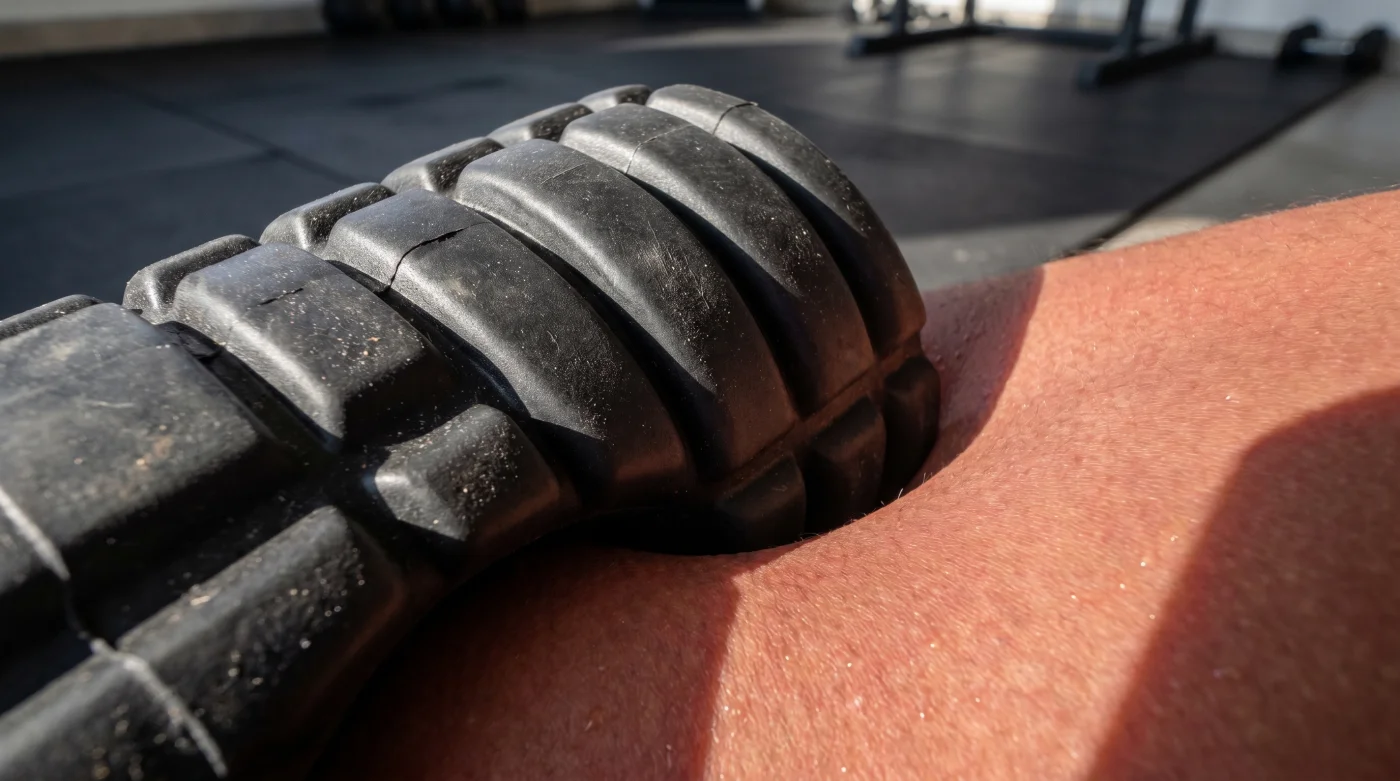
The hum of the ceiling fan mixes with the faint scent of stale morning coffee. You drop your gym bag by the front door and stare down at that dense cylinder of foam sitting ominously on the living room rug. Your outer knee is throbbing, radiating a familiar, dull ache that flares up predictably after three hard miles on the unforgiving asphalt. It feels like a tight, hot wire running from your hip down past your knee cap, complaining with every step you take toward the kitchen.
You lower yourself to the floor, positioning your hip over the roller. You grit your teeth and prepare to crush the pain, sliding your entire body weight back and forth across that tight, inflamed strip of tissue running down your outer thigh. You grimace as the plastic digs into the tender fibers, believing pain equals productive healing, viewing this localized torture as a necessary tax you have to pay for your weekend miles.
But watch a professional runner in the quiet, dim hours of a recovery room. They are not mashing their connective tissue into oblivion. They treat inflamed bodily structures like a bruised peach, knowing that direct, horizontal pressure actually suffocates the area. Pushing a hard object against a swelling band of fascia starves the tissue of the fresh, nutrient-rich blood it desperately needs to stitch those microscopic tears back together.
The pro secret isn’t a higher threshold for pain or a more expensive, vibrating roller. It is a fundamental shift in physiological geography. By attacking the surrounding, supporting musculature instead of the sore spot itself, they relieve tension without trauma, allowing the knee joint to breathe, recalibrate, and repair naturally overnight.
The Bruised Peach Principle
Think of that stubborn band running down your outer thigh like a tightly wound guitar string. When the string feels too tense, dangerously close to snapping under the pressure, you do not pinch the center of the wire to loosen it. Instead, you reach for the tuning pegs at the very top of the instrument.
Mashing a foam roller horizontally across an already irritated knee band does exactly what you would intuitively expect if you squeezed a fresh bruise. It squashes the delicate local capillaries, causing an immediate restriction in blood flow. You are effectively suffocating an area that is frantically screaming for oxygen and cellular repair.
The massive shift in your recovery protocol happens when you stop viewing the site of pain as the source of the problem. That sharp outer knee pain is simply the fire alarm ringing in the hallway. The actual fire is burning much higher up, rooted deep in the dense, overworked muscles of your hip flexors and glutes, which are pulling that long connective band entirely too tight.
- Electrolyte Powders Waste Money Without Precise Sodium Potassium Ratios
- Playbook Wristbands Simplify Complex Audible Chains For Amateur Quarterbacks
- Pine Tar Sticks Around Because Batters Hate Synthetic Grips
- Grip Socks Provide The Footing Needed For Explosive Cuts
- Carbon Fiber Plates Actually Increase Achilles Tendon Rupture Risks
Sarah Lin, a 34-year-old physical therapist who spends her weekends piecing together amateur marathoners in Portland, Oregon, sees this exact mechanical error every Monday morning. “I have weekend runners hobbling in with outer thighs painted in dark bruises,” she notes, adjusting the height of her therapy table. “They spend thirty agonizing minutes a night rolling their inflamed tissue directly, and they wonder why the stiffness gets worse. I tell them to ignore the knee band entirely and spend five minutes releasing the tiny hip muscles controlling all that tension. The relief they feel when they finally stand up is usually instant.”
Adjusting the Tension: Blueprints for Every Body
Recovery is never a uniform, mass-produced prescription. The way you approach your hip mechanics and lower body tightness depends heavily on the specific postures you hold when you are not running or playing sports.
If your Monday through Friday involves sitting hunched in a stiff office chair, your hip flexors are chronically shortened. When you finally hit the pavement on Saturday, those tightly coiled hips yank violently on your knee band with every stride. Your focus needs to be on the front of the pelvis, altering how you spend your hours off the trail to open up that restricted space.
Those who mix heavy weight room squats with weekend basketball leagues face an entirely different beast. Your glutes are incredibly dense and highly prone to developing deep knots, anchoring the unwanted tension at the back of the pelvis rather than the front.
Your rolling strategy must shift gears to target the upper rear quadrant, letting the roller dig slowly into the meaty, forgiving part of your hip rather than grinding against the fibrous, delicate band below. If you simply log high miles every single day, the repetitive, rhythmic impact causes micro-tears and subtle swelling along the entire lateral side of your leg. Your primary goal is flushing out stagnant fluid by keeping the roller moving lightly and vertically along the large quad muscles.
The Indirect Release Method
Fixing that stiff, complaining joint requires quiet intention, not brute force. You want to breathe softly through your nose, letting your body weight sink naturally into the foam rather than aggressively bracing your muscles against the foreign object. Treat this routine as a mindful practice in localized relaxation.
Here is your tactical toolkit for indirect, pro-level knee relief that helps you sink into the foam safely:
- Locate the Peg: Lie on your side, but place the roller unusually high up, resting just below your hip bone where the muscle is fleshy and thick.
- Pin and Breathe: Do not scrub back and forth like a windshield wiper. Let your body weight rest heavily on the spot. Inhale smoothly for four seconds, exhale deeply for six.
- Add Micro-Movements: Slowly bend and straighten your bottom knee while keeping the roller completely still. You are stretching the muscle underneath the pressure, not dragging the pressure across the tissue.
- Address the Glutes: Roll slightly backward onto the side of your rear hip. Find a tender, restricted spot, pause your movement entirely, and let the muscle fibers melt over the cylinder.
- The Three-Minute Rule: Strictly cap your time. Three minutes of precise, breathing-focused pressure up high does significantly more structural good than twenty minutes of agonizing grinding on the lower leg.
Restoring Your Foundation
Letting go of the stubborn “no pain, no gain” mentality is incredibly difficult when it has been aggressively drilled into your head for decades by old-school coaches. Yet, real longevity in any physical pursuit requires a willingness to adapt.
When you finally stop attacking the inflamed, sensitive tissue on your outer thigh, you do more than just spare yourself a few minutes of agonizing floor work. You demonstrate a willingness to work smarter, allowing your body’s natural inflammatory process to successfully complete its biological job, rushing critical nutrients into the micro-tears around your knee without constant, brutal interruption.
You suddenly find that waking up the morning after a long, grueling run feels significantly less like a painful negotiation with gravity. Your legs feel noticeably lighter, your natural running stride opens up without resistance, and you can walk down a flight of stairs without wincing.
You realize that true professional recovery is simply about creating the absolute best environment for healing. By skillfully tuning the muscular pegs at your hip, the biological strings along your knee naturally find their own perfect harmony, erasing the anxiety of chronic joint stiffness and leaving you perfectly ready to move freely when the weekend arrives again.
“Inflammation is your body’s ambulance arriving at the scene; dragging a heavy foam roller across it is like running the ambulance off the road.”
| Key Point | Detail | Added Value for the Reader |
|---|---|---|
| Direct IT Band Rolling | Applying horizontal pressure to the outer thigh. | Increases inflammation and bruising, delaying recovery. |
| TFL (Hip) Release | Pinning the fleshy muscle just below the hip bone. | Turns off the tension pulling on the knee, offering immediate mechanical relief. |
| Glute Activation Rolling | Sinking into the upper rear hip quadrant. | Frees up the posterior chain, improving your weekend running stride. |
Recovery FAQ
Is it ever okay to roll directly on the side of my leg? Avoid the IT band entirely. If you want to roll your outer leg, target the vastus lateralis (the outer quad muscle) by tilting slightly forward.
Why does my knee band hurt more the day after rolling? Direct pressure crushes local blood vessels, worsening the inflammation and creating microscopic tissue trauma.
How often should I release my hip flexors? Two to three times a week is plenty. Your muscles need time to recover from deep tissue pressure just like they do from a heavy workout.
What type of roller is best for indirect release? A medium-density roller works best. Hard, textured plastic tubes often trigger your nervous system to guard against the pain, preventing the muscle from relaxing.
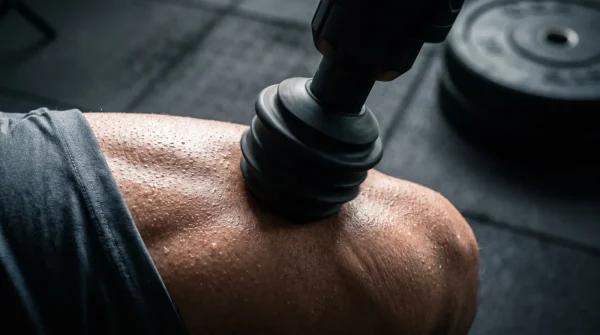
Can I use a massage gun instead? Yes, but apply the same rule. Target the fleshy muscles of the hips and glutes, and never drive the percussive head directly into the side of your knee.